


Industrial Odor Control
Odor is the least visible but fastest-spreading output of your plant. A plant-based, water-based technology for the toughest industrial odors, from wastewater treatment to refineries and from composting sites to rendering plants, that neutralizes at the source without masking. Project engineering is Switzerland-based, and field support is given from Turkey.
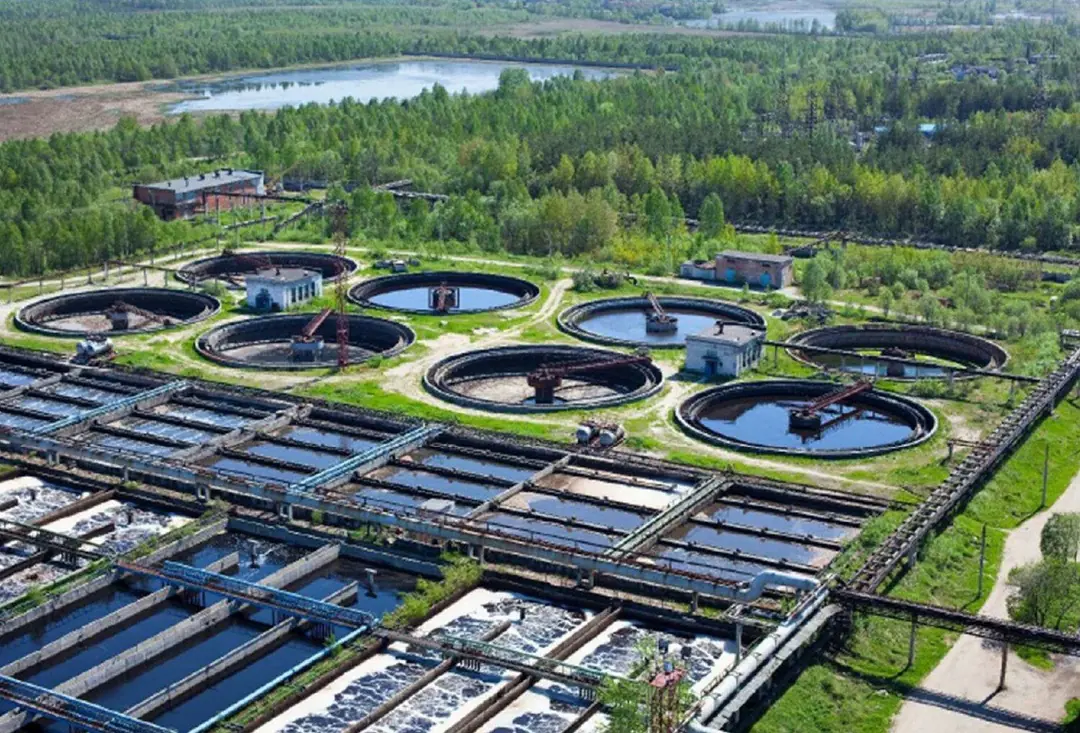
Why is odor a business problem?
For a plant, odor stays something that is "put up with" for a long time, until the first written complaint arrives. After that the matter quickly stops being technical and turns into an administrative file.
An odor complaint goes on record even if it comes from a single neighbor, and as it repeats it triggers inspections. In areas where housing is growing toward the plant, this plays out in months, not years. On the employee side, odor can go beyond a loss of comfort and become an attendance and productivity issue.
The rules of the Ministry of Environment, Urbanization and Climate Change expect plants with a significant environmental impact to keep their emissions, odor included, under control. The Regulation on the Control of Odor-Causing Emissions is the direct framework for this area.
Noncompliance with the regulation is subject to an administrative fine under Environmental Law No. 2872. Beyond the fine, the real cost is repeated inspections, delays in permit processes and local public pressure. Managing odor before it appears means never entering this cycle.
How does ODORGO work?
ODORGO is diluted with water and atomized into the gas stream as a fine mist. Through plant oils, the electrostatic charge on the water droplet and an acid-base reaction, it attracts, binds and neutralizes the odor molecule. Behind these three stages, five mechanisms work together.
Performance is directly proportional to the total droplet surface area in contact with the odor molecule. The target droplet size is below 25 microns, ideally below 10 microns. When the same volume of liquid is split into 10-micron droplets instead of 1000-micron ones, the total surface area increases about 100 times. That is why the product is not "sprayed"; it is atomized.
The system needs no incineration unit, heavy infrastructure or fuel; it is applied with a basic dosing/pump setup, either mixed into water or atomized through nozzles and misting.
Target compounds
It works on acidic, alkaline, inorganic and organic gases as well as on their mixtures.
| Compound | Typical source |
|---|---|
| Hydrogen sulfide (H₂S) | Wastewater, sludge, sewers |
| Ammonia (NH₃) | Compost, animal feed, waste |
| Sulfur dioxide (SO₂) | Combustion, process gases |
| Mercaptans | Refineries, paper, wastewater |
| Amines | Rendering, food and fish processing |
| Styrene | Composites, plastics production |
It also works on odorous compounds of biological origin such as indole/skatole and volatile fatty acids.
Priority sectors
From screens and grit chambers to sludge dewatering, the H₂S, mercaptan and ammonia load keeps changing. A vapor-phase system, point dosing and a perimeter line are used together. Detail page →
In meat, seafood, poultry, dairy and slaughterhouse plants, odor comes from decay and from waste and wastewater lines. ODORGO is positioned as ambient odor control with no food contact; the product is not used at any point that touches the process, the raw material or the product. Detail page →
At transfer stations and landfills, decay of mixed waste, H₂S and leachate odor dominate. A line installed along the perimeter meets the odor right at the property line.
Ammonia, amine and fatty acid odors stand out. Misting over the piles is planned together with a perimeter application; the setup also works on open sites.
Melting, drying and storage lines produce the heaviest odor load. High-pressure atomization and nozzle rings at stack/exhaust outlets are the typical solution.
Other application areas
Equipment family
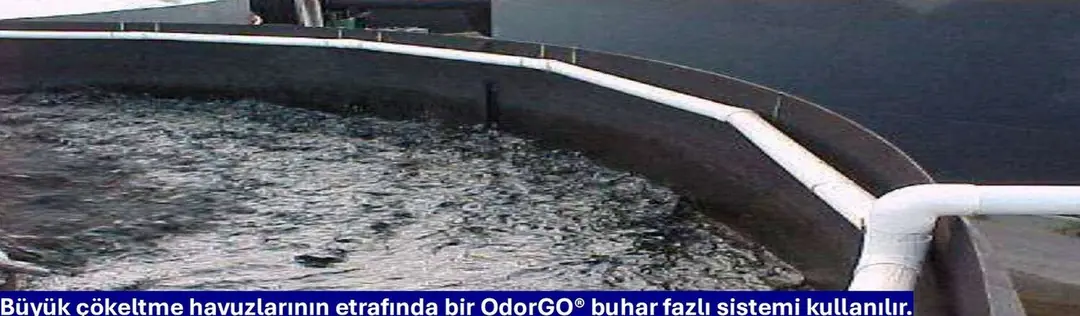
Applies the concentrated product undiluted, needs no water connection and produces a sub-micron dry fog while adding the least moisture to the space. Installed around the site, it meets the odor at the property line; it suits large settling ponds and large enclosed volumes.
Used for diffuse odor emissions. At 800–1000 psi (pounds per square inch) of pressure, droplets of 10 microns and below are obtained; nozzles are placed 1–1.5 m apart. It can also be installed as a nozzle ring at stack and exhaust outlets.
Blows an ultra-fine mist over a wide area or at a point source using nozzle-free centrifugal atomization. Depending on the model, the throw distance is 9–21 m, and with a 360° oscillating head each fan covers more than 240 m². Suited to temporary sites, emergencies and isolated odor zones.
Used at localized sources such as wet wells, tank vents, drain points and air ducts. Because compressed-air (pneumatic) nozzles can run without electricity, they are suitable for explosive atmospheres.
Hazard classification and regulations
ODORGO does not mask odor; it chemically transforms the molecule. Our statements on hazards rest not on marketing lines but on the Turkish-language SDS in the format of KKDİK (Turkey's regulation on the registration, evaluation, authorization and restriction of chemicals).
The SDS carries aquatic toxicity data for d-limonene: in algae, EC50 (half-maximal effect concentration) over 72 hours of 0.32 mg/L, and in fish, LC50 (median lethal concentration) over 96 hours of 0.72 mg/L. The persistence and degradability section of the SDS, however, says "no information"; for that reason we make no claim such as "readily biodegradable" on our pages. The practical upshot is clear: the product is not deliberately discharged to the sewer or the receiving environment, and waste and packaging are disposed of under the plant's chemical waste procedure. Misting does not change this picture: the applied liquid is dilute and disperses in the air; the restriction concerns emptying the concentrate in liquid form.
Managing odor is now a legal requirement
Industrial odor is an environmental matter that must by law be managed in Turkey and in the EU. Plants that do not actively manage odor may face complaints, mandatory measures and administrative fines. The main regulations:
- Environmental Law No. 2872: the basic framework; administrative sanctions for violations.
- Regulation on the Control of Odor-Causing Emissions: olfactometric measurement; measures and sanctions if the limit is exceeded.
- Regulation on the Control of Industrial Air Pollution: emission permit.
- Regulation on the Management of Industrial Emissions (Official Gazette of January 14, 2025, No. 32782; in force December 1, 2025): it requires facilities covered by Annex 1/Annex 2 to hold a Green Transformation in Industry (SYD) certificate; it names odor pollution explicitly in its purpose. It does not replace the environmental permit and license; it comes on top of it.
Comparison with alternative methods
Every method has conditions where it does its job well. The table below was prepared for an honest comparison.
| Method | Where it is strong | Limits | Relation to ODORGO |
|---|---|---|---|
| Ozone | Enclosed, controlled small volumes | Because ozone forms in the space, there are restrictions on use in areas where staff are present; it can wear down materials | ODORGO is water-based and can be applied in areas where staff are present |
| Activated carbon | In-duct gas streams with a constant flow rate and a narrow concentration range | Replacement/regeneration cost after saturation; performance drops with humidity and variable load; cannot be applied on open sites | ODORGO steps in on open sites, at the perimeter and under variable load; inside ducts the two methods can complement each other |
| Thermal oxidizer | High-concentration, continuous and well-defined process gas | High capital and energy cost; makes sense only for a gas stream that can be collected | Out of proportion in scale for nuisance odor and diffuse sources; ODORGO can be complementary |
| Biofilter / biological method | Continuous, steady and humid gas stream | Long start-up time and needs bed area; sensitive to load swings and temperature changes | ODORGO can work in support during peak loads and the start-up period |
| Perfume / masking agent | Short-term, low-load settings | Covers the odor, does not remove it; once the effect wears off the odor returns | ODORGO does not mask; it chemically transforms the molecule |
| ODORGO | Diffuse and variable sources, open sites, perimeters, temporary and emergency situations | Not designed for stack-gas limit compliance; requires the right dosing and equipment selection | Low capital cost, fast start-up, a setup that scales up or down |
The process: four steps
A short form collects plant details, odor sources, air flow rate and complaint history. This is where the process starts.
A needs analysis is carried out on the data from the form; the odor profile and priorities are clarified together. When needed, an online assessment is held with our technology partner's technical team in Switzerland.
Equipment, dosing and layout are engineered; a quote is prepared with the capital and operating cost items.
On-site installation, commissioning and field fine-tuning are carried out. After that, ongoing technical service and dosing optimization continue.
Frequently asked questions
The assessment is run on the site data in the form and the plant's own measurement/complaint records. After commissioning, fine-tuning and verification are done on site.
The right dose is the balance where neither the bad odor nor the product's scent is noticed. Overdosing does not give the desired result; that is why dosing is set by a field test.
No. ODORGO is for nuisance odor control; it is not a stack-gas treatment system for compliance with legal emission limit values. It is meant for managing odor complaints and pressure from neighbors.
Because compressed-air (pneumatic) nozzles can run without electricity, they are suitable for such environments. For misting fans, an explosion-protected option is evaluated.
Not necessarily. It can also be set up as a complement at peak loads where systems such as activated carbon or biofilters fall short, on open sites and on the perimeter line.
Because the equipment family ranges from mobile units to fixed lines, the time depends on the project; most of the application can be done without stopping the production flow. The KKDİK-compliant Turkish SDS, the TÜRKAK-accredited "free-from" analysis reports and the vegan certificate are supplied on request.
Project engineering for your plant and B2B inquiries
Let's map your plant's odor profile together. Fill in the short form and we will put the data on the table at the assessment meeting.
Preliminary assessment form Contact us on WhatsAppDownload the Industrial Product Catalog (PDF)
Trigonium İlaç A.Ş. · Esentepe Mah. Büyükdere Cad. No:201, Loft Residence, Unit 40, Şişli / Istanbul · Phone: +90 212 982 68 45
Looking for a Hotel, Hospital or Office Solution?
Looking for odor control for a hotel, hospital, office, restaurant or retail space instead of an industrial plant? Take a look at our Industry Solutions page. Go to Industry Solutions