


M.Sc. Chemist Sefa Karta · Last updated: October 5, 2026
The smell of coffee brewed in the morning is gone by noon. The fish you fried last night greets you from the curtains the next day. One cigarette smoked in a room can be noticed for weeks.
The difference is no accident. How long an odor stays depends on the molecule itself and on the surface it clings to.
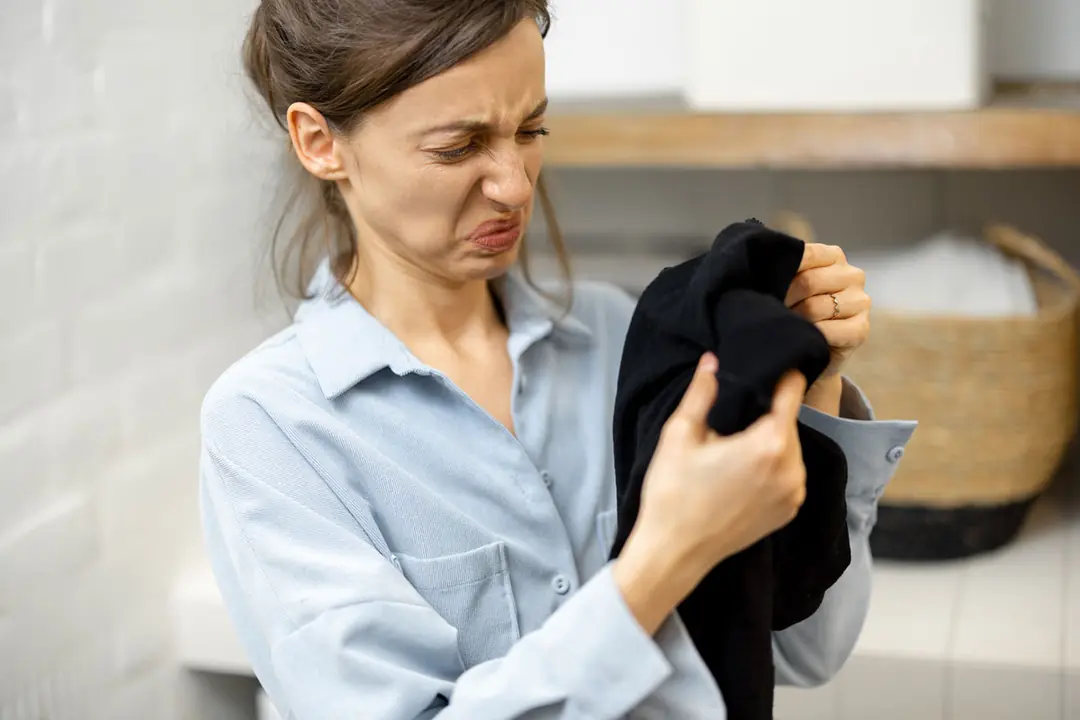
Why do some odors last longer than others?
Light, small molecules evaporate fast and scatter in the air, so the smell is over quickly. The molecules behind cigarette smoke and musty odor are heavier and more complex. They evaporate slowly, settle on surfaces and drift back into the air a little at a time.
The second factor is the chemical family. Amines give fish its smell, sulfur compounds do it for onion and garlic, fatty acids for sweat. Each family hangs on in its own way.
| Odor | Molecule family | Why it lasts |
|---|---|---|
| Fish | Amines | Clings to fabric and to hands |
| Onion, garlic | Sulfur compounds | The nose picks up even tiny amounts |
| Sweat | Fatty acids | Settles into fabric fibers and can remain after washing |
| Cigarette | Tar and oil-soluble compounds | Leaves a thin film on walls, curtains and upholstery |
| Frying | Oil droplets | Sticks to cabinet doors and curtains |
| Mustiness | Volatile compounds from mold | Forms again as long as the dampness continues |
How does an odor cling to a surface?
Carpet, curtains, sofas, wood furniture, even wall paint are porous. Odor molecules get into those pores and are released back slowly. That's why the smell leaves when you air out the room and returns once the window is closed.
Then there is the oil factor. The tar carried by cigarette smoke and the smell of frying are oil-based; they don't mix well with water and they cling easily to the greasy film on top of kitchen cabinets or to synthetic fabric. This is why wiping with water alone falls short.
The kitchen side is covered in the golden rules for frying odor, and smoke that has settled into a home has its own cigarette odor guide.
Why doesn't perfume work on a stubborn odor?
A room spray never touches the odor molecule. It adds a second smell to the air, and for a while that's what your nose picks up. The perfume fades; the bad odor lodged in the pores stays put.
How does ODORGO approach a stubborn odor?
It doesn't cover it. Plant-derived oils attract odor molecules, bind them and neutralize them. It is a water-based formula built on plant-derived oils, with technology rooted in research at Delaware State University in the USA. The spray and gel have up to 98% odor elimination effectiveness. The details are in how we solve it.
The practical takeaway: the product has to reach the place where the odor is. If the odor is in the curtain, spraying the air won't do; you have to spray the curtain.
How do you get a settled-in odor out, step by step?
- Remove the source: the ashtray, the trash, the greasy pan, the wet towel.
- Wipe greasy surfaces. Add 15 mL of ODORGO Multi-Purpose Odor Eliminator Liquid 500 ml to 1 liter of water and go over them with a cloth.
- Shake the ODORGO Odor Eliminator Spray 250 ml well; spray the curtains, the sofa, the carpet and the air.
- Let it dry. Years of odor may not come out in one pass; repeat.
- Put washable textiles in the machine and add one capful of Multi-Purpose Liquid to the detergent drawer. It is used together with detergent.
- In closed spots like closets and pantries, set an ODORGO Odor Eliminator Gel 250 g on a flat shelf.
The spray is water-based; you can use it on any surface that water does not harm. On water-sensitive fabrics and surfaces (unfinished or untreated wood, silk, leather, electronics, etc.), test on a small hidden area first.
What is in ODORGO, and what isn't?
The fragrance-free, phthalate-free, paraben-free, dye-free, sulfate-free, and alcohol-free claims are verified by tests conducted at laboratories accredited by TÜRKAK (Turkish Accreditation Agency) and ILAC (International Laboratory Accreditation Cooperation). The manufacturer declares that no toxins or harsh chemicals are used in the formula. The spray, the gel and the Multi-Purpose Liquid are vegan.
Keep your curtains, carpet and sofa fresh
Frequently Asked Questions
Why does an odor leave when I air out the room and then come back?
Because the molecules settle into porous surfaces like carpet, curtains and walls and are slowly released back from there.
Why does cigarette odor last so long?
Smoke carries heavy, oil-soluble compounds; they stick to walls, curtains and upholstery as a thin film.
Why isn't wiping with water enough?
Frying and cigarette odors are oil-based; water alone doesn't lift the greasy film.
Does ODORGO mask the odor?
No. It doesn't add a cover scent; it binds the odor molecule and neutralizes it.
Is one application enough?
For a fresh odor, most of the time yes. An odor that has built up over years takes a few repeats.
Which odors is ODORGO used for?
Food, cigarette, sweat, musty and pet odors. If the source is still in place, remove it first.